
People Behind the Scenes: Interview with Despicable Me animator Maxime Maleo
-
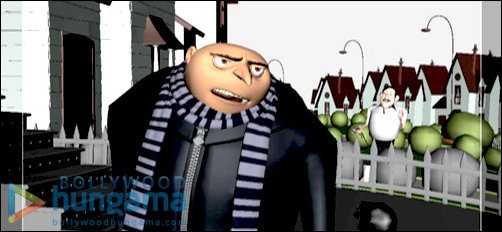
 Animation powers the advertisement and the entertainment industry. With that being said, Read More">an influx of 3D animated films is happening in the near future. The latest to hit the Indian market is the Legends of the Guardians: The Owls of Ga’Hoole which is being touted as the animated version of the epic film 300. TheRead More
Animation powers the advertisement and the entertainment industry. With that being said, an influx of 3D animated films is happening in the near future. The latest to hit the Indian market is the Legends of the Guardians: The Owls of Ga'Hoole which is being touted as the animated version of the epic film 300.
The layman always to some extent harbors misleading notions about animation; animation can get quite confusing if you don't know what it is. By definition animation is an illusion of movement or the process to give 'life to'. There are a thousand possibilities of executing a shot with character animation, "but it's the process that matters", says Despicable Me character animator Maxime (Max) Maleo.
Character animation is a dedicated process concerning the animator who is the actor behind the digital puppet's performance on screen. In animation, dialogues are dubbed during pre-production and are used as reference points for animators to understand the scene or situation that the characters in question are in. The animator's performance counts in making a good film.
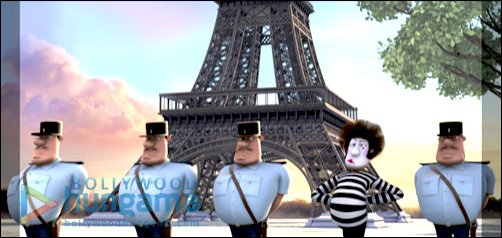
Max, who worked on Madagascar 2 says, "In DreamWorks there are such passionate animators, they're all killer man." The French artist doesn't consider his work comparable even though he has the credit of being the youngest supervisor from France to supervise animation at Crest Animation Studios in Mumbai.
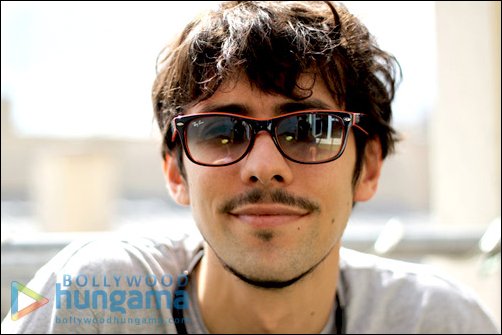
In this exclusive 'People Behind the Scenes' interview Bollywood Hungama's Philip Bode brings you an animated conversation with French animator of Despicable Me fame, Maxime Maleo. -
 How do you think an animator should evolve? Animation is like a global hub, you have to watch dancing, observe paintings; you need to go to the theatres, Read More">you need to feel music because music is timing. One needs to be involved in a little bit of everything. I think an animator should evolve byRead More
How do you think an animator should evolve?
Animation is like a global hub, you have to watch dancing, observe paintings; you need to go to the theatres, you need to feel music because music is timing. One needs to be involved in a little bit of everything. I think an animator should evolve by observing and watching not only movies but life itself. You will give back what you learn by watching. I've dabbled in music for many years, when I'm not animating, I do music, and when I go back to my animation I get a sense of rhythm of the beats that make the tempo of my shot and animation is all about tempo. You could make good strong poses but without good timing the animation fails to deliver.
With stiff competition and hidden talent strewn everywhere across the world and here in India, how do you think one should find his way into the industry?
Aspirants should always be curious, be informed. I watch one movie everyday religiously. This enhances my vision which helps troubleshooting difficult shots and I'm always curious about how things work in this world.
And to conclude this, in a sentence animation to you is...
Since, I've always been doing and dreaming of it, animation is the dream of my life. -
 How do you go about starting the animation process when you begin a scene? To begin with, Read More">I spend the entire day drawing various sketches and ideas that I can imagine; this makes me more familiar to the character and the situation. With this I find the model type and the main poses of theRead More
How do you go about starting the animation process when you begin a scene?
To begin with, I spend the entire day drawing various sketches and ideas that I can imagine; this makes me more familiar to the character and the situation. With this I find the model type and the main poses of the character. In addition to this, I find the tempo and rhythm of the animation. You start questioning the character the more you draw. When I'm satisfied with my sketches, I'd get feedback from the director on improvising.
I think we should always follow a process, with this at the end you have something fine and very detailed. When I'm clear of all doubts regarding direction, I start blocking the main poses of the character in the shot. I always emphasize on strong poses whether if it's in 2D or 3D. When the blocking phase completes, I work on the breakdowns of those main poses. Then I polish all the in-betweens that I made only after I've added antics and the other ingredients of the animation. These methods can be applied to any kind of film and shot. But the most important thing is to draw since it enhances the thinking process of the artist. Animation is not spontaneous; it's about thinking first and then applying what you think about.
Where do you see the global animation industry going? What do you feel about the fate of the Indian and French animation industry?
We've been doing animation for many years and till today it still seems limitless, I think we're just starting the story of animation. With all the mythological content available, India has a great future in the industry. Animation is an intimate process; I still feel like a beginner. I remember one of my teachers in Les Gobelins told me that the best thing to do to stay on track is to keep learning all the time. With any new shot I feel like a rookie, because you'll always have a shot that you don't know how to do. That's why I love this job. -
 How many scenes have you animated, and how long did it take to complete? In over a year, Read More">I’ve worked on about twenty five shots which are quite a few. The weekly quota of animation that each animator had to produce was four seconds by studio law. This was one of the best production-pipelines thatRead More
How many scenes have you animated, and how long did it take to complete?
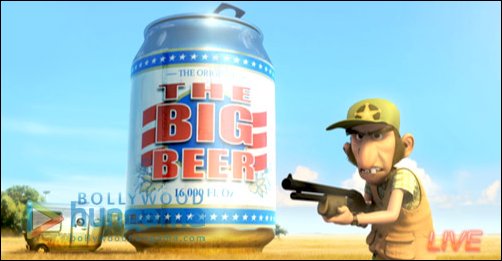
In over a year, I've worked on about twenty five shots which are quite a few. The weekly quota of animation that each animator had to produce was four seconds by studio law. This was one of the best production-pipelines that we had in France. It took two years to make the film, but if you take pre-production and pre-visualization into account, it would add up to more than three years. The animation phase of the film itself lasted for a year and three months. With the success of Despicable Me, the studio in France is getting a lot more projects, and we're basically outsourcing from the Americans. Long before, Walt Disney studios outsourced work in Paris and now, people from Illumination believe that France is capable of churning out good films. This has happened for the first time in ten years to the French animation industry.
Are you comfortable working with Manga, Disney or any other animation style? What do you prefer?
To be honest a good animator should be able to animate any kind of style put forth and if you really like animation, then the style shouldn't matter. If I get a project that calls for Manga style, I'll work with it. I've been studying Japanese animation and I love it, I like the American style as well. I would say I prefer Manga by watching, but by doing I like both the styles. Since I know both ways of working, I can make my animation smarter sometimes by adding a little bit of one with a little bit of the other. It's like cooking food; you mix in the ingredients to make it good, the fusion of both styles would be my favorite style.
The longer I work in the industry the more I start to treat both 2D and 3D in the same light, because it's only the flat picture in the end that counts. Whether its stereoscopy or not, animation will remain the same. We need to think of it this way. A good movie to me should balance the shot, the intensity of the shot and the style should always serve the story that's the most important thing as an animator. For my projects and short films I try to apply this fusion which makes the piece richer. -
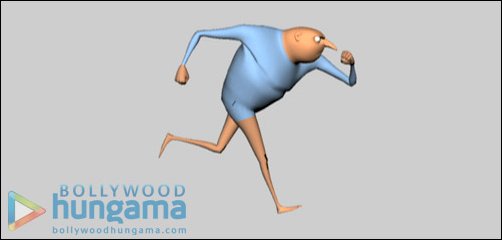 What was the animation process like for Despicable Me? The film is produced by Chris Meledandri of Ice Age fame, who quit Blue Sky Studios to build a new faction with Universal Pictures called Illumination Entertainment. The animation pipeline was a lot like the American process, Read More">the methods of working was in par with DreamWorks.Read More
What was the animation process like for Despicable Me?
The film is produced by Chris Meledandri of Ice Age fame, who quit Blue Sky Studios to build a new faction with Universal Pictures called Illumination Entertainment. The animation pipeline was a lot like the American process, the methods of working was in par with DreamWorks. The director of the film was amazing, first the extreme poses of the character animation is blocked out, then it undergoes the first and second phase, the polish phase and it concludes with the final phase of the animation. This gave us an organized, good condition of working. Despicable Me released in July and received a lot of good reviews in America. The film released in France in the beginning of October.