

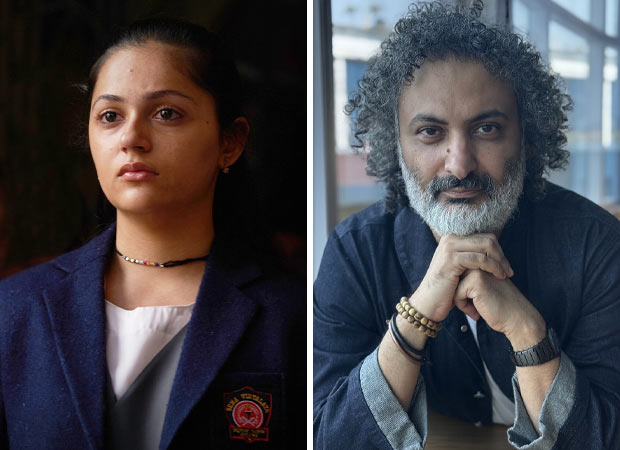
Hunkkaar: The Roar, which was released last month, has received appreciation for its subject, treatment and performances. Moreover, there was tremendous curiosity surrounding the web series due to the presence of Aneet Padda, who became a huge sensation after the release of Saiyaara (2025). In an exclusive interview with Bollywood Hungama, Heeraz Marfatia, who developed the show, served as its lead writer, co-wrote all six episodes and directed the third and fourth episodes, spoke about the process of creating Hunkkaar: The Roar, Aneet Padda's casting and a lot more.
How has life changed since the release of Hunkkaar: The Roar?
The phone has just not stopped ringing (smiles). I have always believed in being courageous and never settling for what is ‘acceptable’ to a larger audience. I had made a short film called Birju more than two decades ago, which was Oscar-nominated. There were no stakes involved; it was just me making a sincere beginning to my filmmaking journey.
Post Hunkkaar, my belief in ‘never settling’ has certainly received a boost. However, I was not fully prepared for what it takes to get something hard-hitting and pure made in a commercial industry where valid market forces are at play. It just takes the time it takes. Along the way, when things were not working out, I was blessed to collaborate with Palme d'Or and Oscar-winning directors like Roland Joffé, and later with my guru, Shekhar Kapur. If you stick with it, slowly but surely, you meet people who believe in you.
So, to answer your question, what has changed is that my belief has truly turned into conviction simply by living that belief. Nothing would make me happier than seeing more hard-hitting shows and films being released that also become full-blown commercial successes.
You have directed two episodes. How was the experience? Also, how did you and the other directors ensure that you remained on the same page in terms of treatment?
My co-directors, Karan Darius Kapadia and Nitya Mehra, and I were always concerned about that. Somehow, American shows have mastered the consistency of cinematic language. The transition between directors is seamless. I suggested an approach, and Nitya and Karan were supportive of the idea. Nitya, in particular, was extremely generous in agreeing to work on the shot breakdown of the pilot episode together, even though it was her episode to direct.
The three directors and both cinematographers, Kavin Jagtiani and Kabir Tejpal, worked on the breakdown together. It took time and effort, but we got to where we needed to be, which was on the same page! We were also very fortunate to have Kavin and Kabir execute this seamlessness so beautifully.
There have been films and shows dealing with godmen sexually assaulting devotees, such as Maharaj, Aashram and Sirf Ek Bandaa Kaafi Hai. How did you and the team ensure that Hunkkaar stood out?
The writing could never work within the familiar paradigms that you have mentioned. So, a singular ‘premise’ needed to be developed. For example, why does the system not work? We also needed a sharp ‘point of view’ to enhance our take, which was that the system is only as good or as bad as the office-bearers who run it.
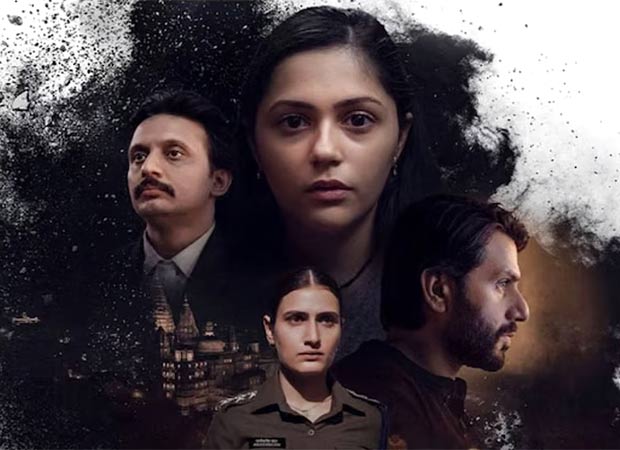
Instead of making viewers feel powerless about a system that never seems to work, we wanted to give a hopeful message. All the pillars of the criminal justice system, be it the cop, the lawyer or the journalist, can work effectively. They just need to do their jobs without passion or prejudice. When the office-bearers of the system do the right thing, the system becomes a juggernaut that cannot be stopped. The message is simple: empower yourself. You, the people, are the system.
After almost six hours of viewing, you should feel empowered to stand up against this self-created behemoth, only to realise that there is a way forward. You are the system, and you can change things.
Aneet Padda's casting added to the curiosity surrounding the show, and she has delivered a fantastic performance. Did you ever consider casting an established name, considering that she was relatively unknown when she signed the series?
Yes, Aneet has delivered a sublime performance. That's the beauty of making a series. You don't necessarily have to cast established names. New talent brings fresh energy into the ecosystem. Look at where Aneet is now; the whole world is her playground!
Aneet Padda shot for Hunkkaar before Saiyaara. What made the show take so long to release?
Hunkkaar was financed and made by Applause Entertainment. They are among those rare companies that believe in incubating their shows through development and production. Here, I would like to give a shout-out to Rahul Vedparkash, the creative producer from Applause's end.
Birla Studios and Applause Entertainment allow the makers to do their thing. They then take their time to find the right home for the show, one that can harness the potential and reach of the story. We also are very fortunate to have found a home in JioHotstar, especially considering the kind of show Hunkkaar is.
Was there jubilation among you and the team when Saiyaara became a blockbuster and Aneet Padda became the heartthrob of the nation? After all, it was a foregone conclusion that your show would benefit from her newfound stardom...
Yes, we were all ecstatic, especially since I knew how hard Aneet had worked to land the role of Vaani in Saiyaara. All the credit goes to her. Whatever advantage the series has gained from Aneet's well-deserved stardom has been amplified because Hunkkaar lives up to the weight of the expectations that the public had from her. And I am glad to report that Hunkkaar has answered that call with a big roar!
Was there any apprehension that, in a sensitive country like India, a show like Hunkkaar might face opposition from a section of society?
I am delighted and yet humbled that a bleak tale like Hunkkaar has been received with so much love. Our work represents the power of hope. The story is about getting justice, and the human spirit is always drawn to such themes. So, we had full confidence in the human spirit and had no apprehensions.
One scene that sets the mood and is also quite disturbing is when Aneet Padda's character is video-recording her statement and gets interrupted twice. How did that scene come about in the writers' room? Also, could you explain how a writers' room functions?
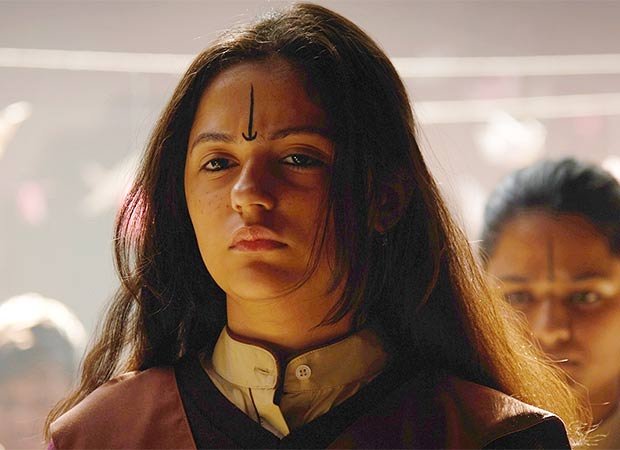
As lead writer, it's important to focus on research and read about victims who have transformed themselves into survivors. This scene is a small example of where the writers' room comes to the fore. So much has been written about how law enforcement collects information in a very inhuman, almost callous and clerical manner. It's brutal for a survivor to have to relive the trauma repeatedly while giving testimony. In Meenu's case, she has to recount her ordeal a dozen times before she finally calls out the complete disregard that society and the criminal justice system have for the very victims they are supposed to protect.
So many little nuggets come out of the writers' room. For instance, there's the moment when Ram Kapoor's character, the defence lawyer, decides not to question Meenu any further and offers her a handkerchief as a mark of respect. Such moments emerge when four writers' minds come together and create a collective vision.
The writers' room is like balancing a bicycle while steering it in the right direction. Plot, characters, episodic structure, season arc, the dramatic needs versus the dramatic goals of each character – these are the questions that keep you up at night. The writers' room is the heart of a show. I was blessed to collaborate with extremely talented writers, Ravinder Randhawa and Nikhil Nair.
Which was the toughest scene to crack?
Not a scene per se, but the entire trajectory of the case, with its many twists and turns, was difficult to crack. It took us a few months to get it right. How would the prosecution devise its strategy? How would the defence think? How would the audience feel? How would the judge view the case? Maintaining a balanced perspective from all angles while keeping everything authentic was the biggest challenge.
You have a development-first, writing-led production company called Writers Cut. Why have you chosen to put development at the centre of the business at a time when the industry is increasingly driven by speed and the packaging of projects for production?
I co-founded Writers Cut with Shubhra Swarup (Writer and Co-producer on Delhi Crime). You ask why we have chosen to put development at the centre of our business. That's because we don't want to be in the content business; we want to be in the story business. The present ecosystem is all about producing more and more content. That's why a story like Hunkkaar, or even Delhi Crime, cuts through the content clutter like a hot knife through butter.
Also, it's very important to recognize one's own skill set. We are not into the packaging game. We just want to tell stories that move audiences in the best possible way. Yes, revenue is vital in any business. But our position is simple: you can't take the story out of the storytelling business. Commercial success and good storytelling are not mutually exclusive; in fact, they are inextricably linked. Take an average story and package it with the biggest stars, brilliant production values and enormous marketing spends. Now, tell that same story a little better with all the other elements remaining the same, and your revenues will leapfrog. It's basic, but all the noise around us makes us overlook it.
Incubation during development is the key. Films, shows and even video games require world-building. You can't become a great world-builder unless you've attempted it many times before and failed along the way. Development, like any discipline, requires you to have gone down the rabbit hole many times, knowing fully well that you may never reach Alice in her Wonderland.
What's next?
Hopefully, we get to tell more compelling and immersive stories. Writers Cut is co-producing a show with Channel 4 that Shubhra and I have created. Writers Cut is also co-producing a couple of shows in India that we have developed. There's a feature film on the cards as well. Details will emerge in due course, when we are ready to announce them.
More Pages: Saiyaara Box Office Collection , Saiyaara Movie Review
BOLLYWOOD NEWS - LIVE UPDATES
Catch us for latest Bollywood News, New Bollywood Movies update, Box office collection, New Movies Release , Bollywood News Hindi, Entertainment News, Bollywood Live News Today & Upcoming Movies 2026 and stay updated with latest hindi movies only on Bollywood Hungama.