

Editor RC Pranav has built a reputation for shaping films across genres, from the critically acclaimed 83 to the recently released mythological action epic Nagabandham. In an exclusive interview with Bollywood Hungama, he spoke about his approach to editing, the challenges of handling large-scale productions and why he believes writing is the foundation of every film.
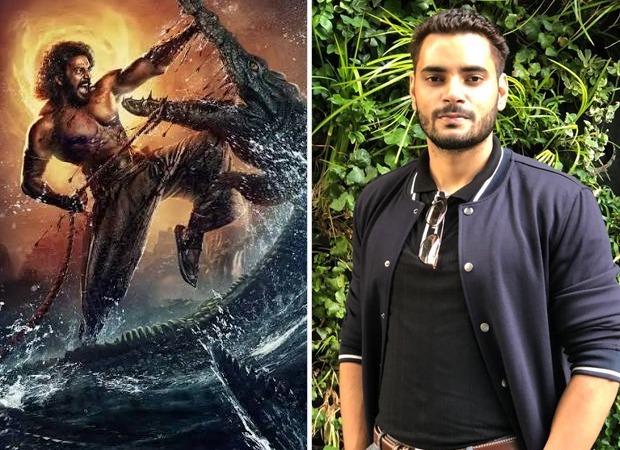
How would you define the process of editing to an average moviegoer?
Editing is basically shaping the film. It is not just about putting shots together; it starts much earlier. I am involved from the writing stage itself, understanding what the director wants to say and how the story needs to be presented. For me, editing is about finding the right emotion, the right pace, and the right way to tell the story. Sometimes, you have to remove scenes, sometimes you have to restructure things, and sometimes you have to create something completely new on the edit table.
Editing is also a very challenging process because you are making a lot of decisions. For example, sometimes even if an actor has performed well, if the story demands it, you might have to remove that character or change the way the sequence works. There was one instance where an actor had a very busy schedule and couldn’t give dates, so we had to kill that character in the film. These are the kinds of decisions that happen during editing.
How was your experience of editing Nagabandham?
I was very overwhelmed in the beginning, and I did have a little bit of stress about how I was going to handle such a big film. But we had a great team and a very visionary director. After every schedule, his vision just got bigger and bigger, and it was a very fun and special experience working with him. Being a part of such a big vision and an ambitious project naturally comes with pressure, but my director gave me a lot of creative freedom during the editing process and even during the shoot. I was on set for almost 90-91 days, editing on the spot, and I was given a lot of freedom to explore creatively.
I thoroughly enjoyed the entire process of editing such a big mythological action epic film because there is so much scope for creativity. We had a great team, and everyone was very supportive. Even though many of us, including myself and the music director, were working on such a big project for the first time, everyone supported each other.
The biggest challenge was the amount of footage we had. We shot almost 300-400 hours of footage. Every sequence had around 30-35 hours of footage, so the challenge was to watch everything and decide what to keep and what to remove. You have to make a sequence that is maybe 10 or 12 minutes long from so much material.
The interval sequence was especially challenging because it was a very intense and long sequence. My first cut itself was around 17-18 minutes. Some shots were randomly captured, so everything had to come together on the edit table, and I had to create meaning and emotion from those shots. Apart from that, everything was smooth, and it was really fun working on the film.
You also edited the teaser and trailer of Nagabandham. What are the challenges of editing promotional material compared to editing the entire film?
I edit the teaser, trailer, and promos of all my films because I believe an editor is the person who knows what to show and what not to show. Since an editor has travelled with the project for so long, he understands the film better compared to someone coming from outside. When it comes to trailers, I feel there is a difference between Bollywood and the South industry. In Bollywood, many times trailers reveal almost the entire film, including the twists. But in the South, we usually focus more on creating curiosity. We don’t reveal the story completely. We show what is required for marketing but also make sure the audience wants to know more.
My process is very simple. I write down my film in one or two lines, like what the film is actually trying to say. For Nagabandham, it is about an ancient secret door that should not be opened. To protect this door, there are Naga sadhus, and there is a villain who wants to open it. To open this door, he needs a key called Brahma Kamalam. This is the basic idea I wanted to show in the trailer. The film has many layers and subplots, but the trailer should focus on the core idea.
The way you cut the trailer is the real game. How you introduce characters, what kind of music you use, what rhythm you follow, and how you create curiosity and suspense are very important. Even in the Nagabandham trailer, the way Shiva’s character was introduced and the way the villain holding the Brahma Kamalam was shown in front of the door created curiosity. The audience thinks, “He has already reached there. Now what happens?” Many people told me that I had almost shown the entire film in the trailer, and I would just laugh and say, “It’s okay, you can think that.” But when they watch the film, they will realise that only around 30-40% of the film was actually shown in the trailer.
Is it more challenging to edit films that have a lot of action?
At the end of the day, whatever said and done, the most important factor in a movie is the writing. If the writing is strong, whether it is the screenplay, dialogues, or the emotional elements, then you just need to do good editing. Everything else will fall into place. Only when the writing is weak, that’s when you have to work very hard on the edit table. You have to keep changing the screenplay, come up with new ideas, understand why a scene is not working emotionally, whether a scene needs to be removed, or how it can be improved through editing.
I feel every genre has its own challenges. Action, thrillers, and horror films are heavily dependent on editing and music because they work on rhythm and pace. The tension and excitement are created by the editor. For example, in a horror film, when a ghost is about to appear and scare the audience, the timing of that moment is created by the editor, music editor, and sometimes the VFX team. Even if you are late by 10 frames while placing a jump scare, the impact changes. The audience will not get the same feeling because the timing is very important.
But every genre is challenging. Even in a simple drama, you need to know where to cut, whose reaction to show, and when to move from one character to another. If you miss the emotional timing, the entire scene can fall flat. So, I feel editing is complicated for every genre. But the most important thing is writing. If the writing is strong, editing becomes a much smoother process.
More Pages: Nagabandham Box Office Collection
BOLLYWOOD NEWS - LIVE UPDATES
Catch us for latest Bollywood News, New Bollywood Movies update, Box office collection, New Movies Release , Bollywood News Hindi, Entertainment News, Bollywood Live News Today & Upcoming Movies 2026 and stay updated with latest hindi movies only on Bollywood Hungama.