

For years, the phrase regional cinema carried a quiet ceiling within the Indian film trade. It was a label of respect, yes, but also of limitation. A regional film could be acclaimed. It could be rooted. It could win awards, dominate conversations in its home state and occasionally surprise the national market. But when the conversation moved to big-ticket economics, massive openings, premium scale and Rs. 100 cr. dreams, the centre of gravity almost always shifted back to Hindi cinema or the South Indian industries with proven pan-India reach. That is what makes Raja Shivaji more than just a successful Marathi film. It is beginning to look like a trade event.
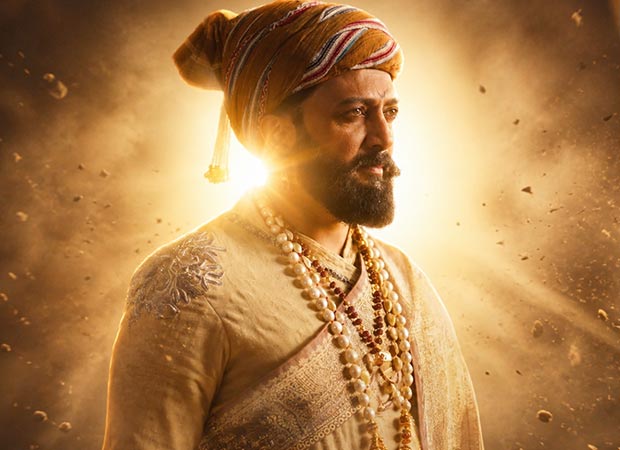
More importantly, it is forcing the industry to ask a question that would have seemed almost unthinkable a few years ago: can a Marathi film now be planned, mounted and consumed like a full-blown national event film without losing its local soul?
Raja Shivaji has reached around Rs. 53.3 cr. India net by Day 6, becoming the fastest Marathi film to cross the Rs. 50 cr. mark. In any other industry, these would be impressive numbers. In Marathi cinema, they are potentially transformative.
The figure matters, but the speed matters even more. But when a Marathi film races past the Rs. 50 cr. mark in its first week, it signals pre-release anticipation, audience urgency, exhibitor confidence and repeat value potential, the four pillars of blockbuster economics.
For decades, Marathi cinema has been admired for its writing, performances and cultural rootedness. It has given Indian cinema some of its finest actors, storytellers and emotional narratives. Yet the industry often operated within a psychological commercial boundary. A film could be loved, acclaimed and profitable, but the Rs. 50-70 cr. zone felt like the invisible ceiling, with Sairat standing as the once-in-a-generation outlier. Raja Shivaji challenges that ceiling because it does not behave like a modestly mounted regional film. It behaves like an event film.
Riteish Deshmukh has understood something very important: cultural pride cannot be treated cheaply. A subject like Chhatrapati Shivaji Maharaj does not merely need reverence; it needs scale. It needs visual ambition, production design, music, costume, action, emotion and the kind of cinematic treatment that allows audiences to feel that their history has been mounted with dignity.
This is where Raja Shivaji changes the conversation. It does not ask the audience to choose between content and canvas. It attempts to deliver both. And that is exactly where the new Indian box office is heading.
For a long time, Marathi cinema’s greatest strength of its rootedness was also seen as its commercial boundary. Raja Shivaji flips that logic. It suggests that rootedness is no longer a restriction; if packaged with conviction and scale, it can become the very engine of mass appeal.
The lesson of the last few years has been clear. Whether it is Kantara, KGF, Pushpa, RRR or Baahubali, the films that travelled beyond their core markets were not embarrassed of their roots. They doubled down on them. They made the local feel mythic. They made specific cultural worlds feel cinematic enough for everyone to enter. Raja Shivaji is attempting a similar argument for Marathi cinema.
That is why the film’s success should not be viewed only through the lens of collections. Its larger achievement is perception. It is making producers, exhibitors and audiences look at Marathi cinema not as a parallel cultural space, but as a serious commercial force capable of creating its own tentpole moments.
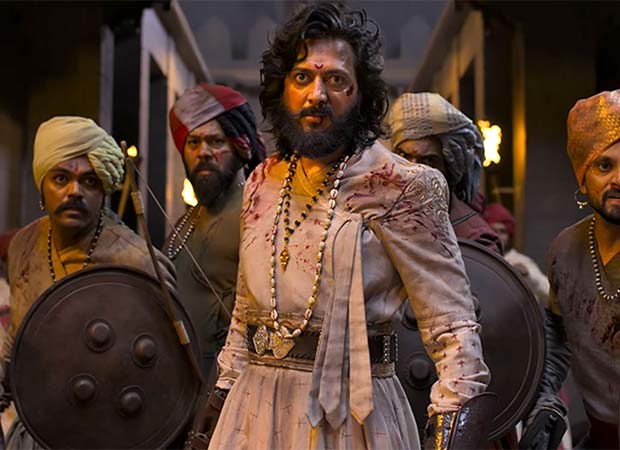
Veteran trade analyst Taran Adarsh lauds Raja Shivaji's success. He believes that the subject also played a key role in its success, which indicates that one should give a lot of thought to the storyline one aims to project. “Yes, it is primarily a Marathi film,” he said. “But I think it’s a subject that holds universal appeal. Everyone knows the story, and everyone knows what the film is all about. The title itself is very clear that the film is about Chhatrapati Shivaji Maharaj. It’s not limited to only Maharashtra because his bravery, valour and the way he lived his life is something everyone knows about. It’s a universal subject, and it’s a very well-made film.”
He agrees that Raja Shivaji has proven that even a regional film aimed primarily at a Marathi audience can be mounted like a Pan-India film. “It has proven that. If you look at last year’s Chhaava and this year’s Raja Shivaji, both have been mounted on a very large scale. They have been shot very well, and they are not just limited to the Marathi audience. It is made for a Pan-India or Pan-Global audience.”
The other fascinating part of the Raja Shivaji story is Riteish Deshmukh himself.
For a large section of the Hindi film audience, Riteish has long been associated with comedy, ensemble entertainers and his effortless comic timing. But in Marathi cinema, his journey has been far more strategic. With Lai Bhaari, Ved and now Raja Shivaji, he has not merely acted in successful films; he has helped expand the commercial imagination of Marathi cinema. That is what makes his trajectory important. Riteish is no longer functioning only as an actor. He is becoming an architect.
He understands the Hindi film market. He understands Marathi cultural sentiment. He understands star packaging. He understands the value of family audiences. Most importantly, he understands that regional cinema cannot break ceilings by thinking small.
There is also a quiet intelligence in the way Riteish has repositioned himself. Instead of chasing Pan-India validation only through Hindi cinema, he has gone back to his cultural roots and built scale from there. In a sense, he has reversed the usual career logic. He is not using Marathi cinema as a comfort zone; he is using it as a launchpad for ambition.
His biggest contribution here may not be only that he delivered a successful film, but that he treated Marathi cinema with the same commercial seriousness that Bollywood reserves for its biggest spectacles. He has shown that respect for culture and hunger for scale need not be opposites.
In the long run, Raja Shivaji could become a turning point not just for Marathi cinema, but also for Riteish Deshmukh’s legacy. Hindi cinema may remember him as one of its most dependable entertainers, but Marathi cinema may remember him as the man who dared to enlarge its canvas. If Sairat proved that Marathi cinema could shock the box office, Raja Shivaji may prove that it can plan for greatness.
That is why Riteish’s achievement deserves to be seen beyond the weekend numbers. He is not merely celebrating a hit; he is building a blueprint. And if Marathi cinema follows that blueprint with the right mix of authenticity, ambition and scale, Raja Shivaji may well be remembered as the film that did not just break records, but broke a mindset.
More Pages: Raja Shivaji Box Office Collection , Raja Shivaji Movie Review
BOLLYWOOD NEWS - LIVE UPDATES
Catch us for latest Bollywood News, New Bollywood Movies update, Box office collection, New Movies Release , Bollywood News Hindi, Entertainment News, Bollywood Live News Today & Upcoming Movies 2026 and stay updated with latest hindi movies only on Bollywood Hungama.