

For years, Hindi cinema sold us dreams. In the 1990s, it was love. Raj stretching out his hand. Simran running to catch the train. Grand emotion. Soft rebellion. The fantasy was that love could conquer the world.
Then came the 2000s, when aspiration changed shape. Multiplex cinema gave us coolness, friendship, urban heartbreak, designer pain and polished confusion. The hero was no longer angry with the system. He was navigating it, flirting through it, dancing around it.
But look at Indian cinema now, and the shift is impossible to ignore. The dominant fantasy is no longer love. It is power.
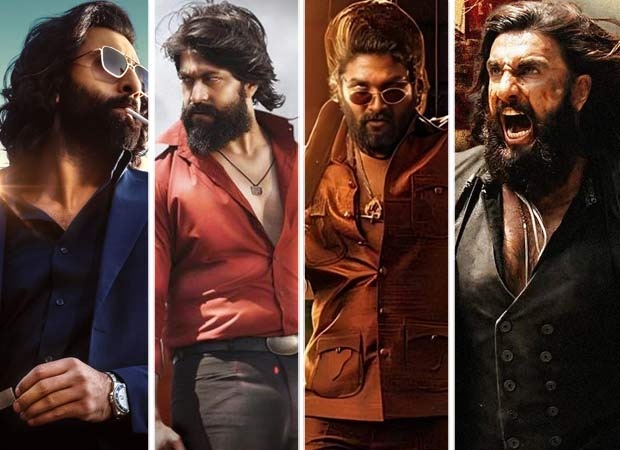
The biggest event films of this era are not being built around tenderness, vulnerability or emotional longing. They are being built around fury. Animal. KGF. Pushpa. Dhurandhar. Dhurandhar The Revenge. Strip away the scale, the swagger, the slow-motion entries and the deafening background score, and you will find the same figure standing at the centre of them all: The Angry Young Man. And that should make us pause.
Because the Angry Young Man isn’t merely a massy cinematic trope making a comeback. He is a cultural signal. A warning light. A reflection of what the audience is carrying inside.
Amitabh Bachchan immortalised this figure in the 1970s and 1980s, when distrust in institutions, economic frustration and social disillusionment had created a hero who could no longer afford politeness. He did not sing his way through injustice. He punched through it.
That archetype never fully disappeared, but it certainly lost its dominance. For a long time, the market believed India wanted charm over confrontation, romance over rebellion, polished heroes over wounded ones. Now the box office is saying the opposite.
The new-age blockbuster hero is angry, wounded, hyper-masculine, morally blurred and increasingly uninterested in approval. He does not ask the system for justice. He bypasses it. He destroys it. That is not accidental. Nor is it just mass cinema doing mass cinema things. It is a demand. And demand does not emerge from thin air.
The uncomfortable truth is that these films are not manufacturing rage. They are monetising a rage that already exists. Across the country, there are millions of young people carrying a widening gap between aspiration and reality. They have been told to dream endlessly, hustle endlessly, consume endlessly, compare endlessly and wait endlessly. But the reward does not arrive at the same speed as the promise. Institutions feel distant. Systems feel rigged. Dignity feels negotiable. Progress feels uneven.
What happens then? The fantasy changes. When love feels unaffordable, people buy power. When fairness feels impossible, people worship force.
When the system makes you feel invisible, you cheer for the man who makes the system bleed.

That is why the success of these films should not be dismissed as mere front-bench frenzy or toxic fanboyism. That reading is too lazy. Too elite. Too comfortable.
Because if film after film featuring violent, furious, anti-establishment male energy is becoming a phenomenon, then maybe the real question is not, “Why are filmmakers making these movies?” Maybe the real question is, “Why are so many people seeing themselves in them?” This is where many critics completely miss the plot.
They treat these films as though they are viruses infecting culture. But cinema, especially popular cinema, is rarely that simple. It is often diagnostic before it is destructive. It detects a public mood before academia, policy, and media are willing to name it. The box office sometimes reads the country faster than our think pieces do.
That does not mean every angry blockbuster is profound. Nor does it mean all of them are socially healthy. Some are excessive. Some are troubling. Some are morally irresponsible. But their popularity cannot be explained away by outrage alone. If anything, the outrage around them only proves how powerfully they have touched a nerve.
And perhaps the most telling part of this era is this: the return of rage is happening at a time when the traditional nice hero is losing cultural dominance. The soft, lovable, safe protagonist increasingly feels too weak for the emotional climate of the moment. Audiences are not just looking for heroes anymore. They are looking for avengers. That is a seismic shift.
The rise of the Angry Young Man in this decade is not just a film trend. It is a mirror to an India that is more impatient, more frustrated, more combustible and more emotionally cornered than the industry wants to admit.
Because when a nation stops fantasising about love and starts fantasising about revenge, the box office is telling you something far bigger than which star is hot. It is telling you what hurts. And right now, what hurts is winning.
More Pages: Dhurandhar The Revenge Box Office Collection , Dhurandhar The Revenge Movie Review
BOLLYWOOD NEWS - LIVE UPDATES
Catch us for latest Bollywood News, New Bollywood Movies update, Box office collection, New Movies Release , Bollywood News Hindi, Entertainment News, Bollywood Live News Today & Upcoming Movies 2026 and stay updated with latest hindi movies only on Bollywood Hungama.