

Bollywood loves a blockbuster. But it loves copying a blockbuster even more. That is why Dhurandhar The Revenge should not just be celebrated. It should also be feared.
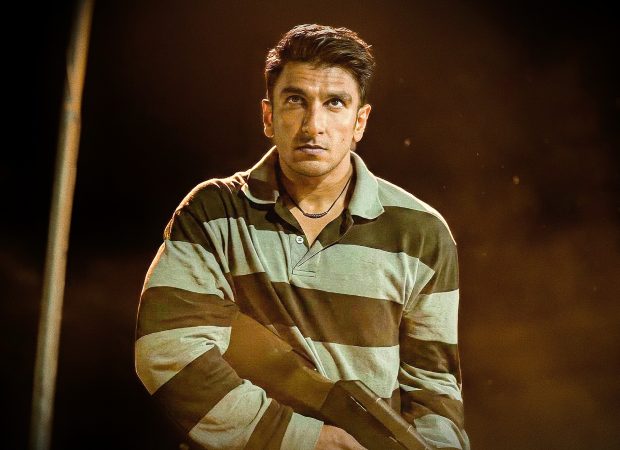
Because while the film’s historic run is a triumph for theatres, exhibitors and the idea of big screen cinema, its real impact will be decided not by its own numbers but by what Bollywood does next. And if history is any indication, that next phase is unlikely to be thoughtful. It is likely to be chaotic. Every time the industry witnesses a phenomenon, it does not study it. It simplifies it.
After Kabir Singh, the takeaway became toxic masculinity sells.
After Pushpa and KGF, the takeaway became mass rage sells.
After Pathaan and Jawan, the takeaway became scale + star = guaranteed explosion.
None of these conclusions were entirely wrong. But all of them were dangerously incomplete. And that incompleteness is what leads to imitation without understanding. And the most expensive mistake Bollywood keeps repeating.
Now comes Dhurandhar 2. A film that blends scale, rage, emotional hooks, franchise recall, directorial control and a carefully engineered theatrical urgency. But instead of decoding that complexity, the industry is far more likely to latch on to the most superficial elements: bigger action, louder background scores, darker protagonists, more screaming trailers, more franchise announcements, more Part 2 declarations before Part 1 has even recovered its cost. That is where the danger begins.
Because success at this level creates pressure. And pressure in Bollywood rarely produces originality. It produces imitation at speed.
In the coming months, do not be surprised if multiple projects suddenly start chasing the same template. More angry hero narratives. More attempts to manufacture scale rather than earn it. More filmmakers trying to recreate intensity without understanding rhythm. More producers believing that if they increase the budget, the audience will automatically increase the interest.
That is not how this works. It never has.
What made Dhurandhar 2 explode is not just what is visible on screen. It is what is invisible. The control over pacing, the understanding of audience psychology, the clarity of tone, the conviction in storytelling, and above all, the ability to create urgency. The feeling that this is not just a film to watch, but a film to experience now. You cannot copy that with a louder trailer. And yet, that is exactly what Bollywood tends to do.
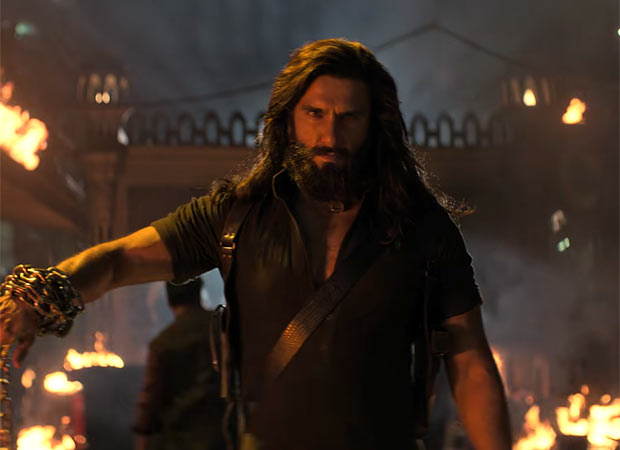
This is where the comparison with the post-Baahubali and post-KGF phases becomes relevant. After those films, several industries including Hindi cinema tried to replicate the aesthetics of scale without replicating the discipline behind it. The result? A flood of expensive films that looked big but felt hollow. Spectacle without soul. Noise without narrative.
There is a real risk of that cycle repeating. Because Dhurandhar 2 is not just a hit. It is a benchmark disruptor. It raises expectations. It shifts perception. It forces competitors to react. And when competitors react too quickly, they rarely react intelligently. This is also where the film becomes dangerous for stars.
Because if the wrong lesson is taken, we are likely to see a wave of star led projects trying to out-Dhurandhar 2 with bigger fights, bigger villains, bigger canvases, bigger claims. But bigger is not always better. Without a director who can control scale, all that expansion becomes inflation. And inflation, in cinema, leads to collapse.
That is when the audience punishes the industry. The modern audience is far sharper than Bollywood often assumes. It can distinguish between authenticity and imitation within minutes. It can sense when a film is designed as an event and when it is pretending to be one. And when it detects imitation, the rejection is swift and brutal. There are no sympathy votes anymore.
That is why the next 12–18 months become crucial.
If Bollywood learns the right lesson from Dhurandhar 2, it could trigger a golden phase of ambitious filmmaking where scale is backed by conviction, where directors take charge, where stars collaborate with vision instead of relying on formula, and where theatrical cinema regains its edge.
But if it learns the wrong lesson, we are heading towards something far messier. A cluttered market. Overstuffed action films. Franchise fatigue before franchises even mature. Budgets ballooning without proportional returns.
And eventually, a correction phase where multiple big films collapse under the weight of their own imitation. That is the copycat chaos. And Bollywood has walked into this trap before.
The irony is that the biggest compliment one can give Dhurandhar 2 is also its biggest risk to the industry. It has shown what is possible. But in doing so, it has also tempted everyone else to believe that possibility is easy to replicate.
It isn’t.
Dhurandhar The Revenge’s long-term legacy will depend on how Bollywood responds to it. If the industry chases its spirit, it could elevate Hindi cinema. If it chases its surface, it could flood the market with loud, expensive, hollow imitations. The film has set a new benchmark. Now comes the real test whether Bollywood rises to it, or reduces it to a template.
More Pages: Dhurandhar The Revenge Box Office Collection , Dhurandhar The Revenge Movie Review
BOLLYWOOD NEWS - LIVE UPDATES
Catch us for latest Bollywood News, New Bollywood Movies update, Box office collection, New Movies Release , Bollywood News Hindi, Entertainment News, Bollywood Live News Today & Upcoming Movies 2026 and stay updated with latest hindi movies only on Bollywood Hungama.