

The 100th birth anniversary of Shakti Samanta, one of India's finest filmmakers, was celebrated on January 13. On this memorable occasion, Shakti Samanta’s talented son, Ashim Samanta, spoke exclusively with Bollywood Hungama about his legendary father and some of his famous works.
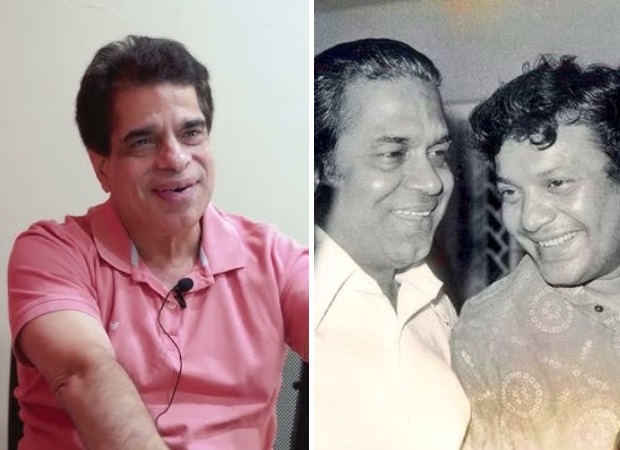
How did Shakti Samanta like to celebrate his birthdays?
He would always have a birthday party, which his staff would organize. Way back when I was in school, I remember we used to go to his office on his birthday. The staff would call us and he would cut the cake. On his birthday, he used to give a bonus to his staff (smiles). Din mein office mein party hota tha aur raat ko ghar pe! Dad’s friends used to come to our house. It used to be a lovely experience.
He died in April 2009. Even that year, we had a birthday celebration at the office. That year, we had two parties! One was a mock birthday party, which was held two days before, on January 11, for a shoot organized by Doordarshan. Hence, they shot it on January 11 so that they could edit and present it on air on January 13. They filmed him celebrating his birthday with his staff and cutting the cake. They also took an hour-long interview, which was also aired on Doordarshan.
Was that his last interview?
Yes. A month later, in February 2009, we hospitalized him. In fact, we were in the office and decided to take him to the hospital. We went home for just 10 minutes to get clothes. From there, we headed to Jaslok Hospital. Once he was admitted, we realized that the battery of his heart defibrillator was low and had to be changed. That created some complications.
He did return home 7 days after hospitalization. But the night he came back, he got a stroke. He suffered for five weeks and then he passed away. on April 9, 2009.
A lot has been spoken about your father’s films, music, the legacy etc. But one film that particularly caught my interest in his biography is Amanush (1975). It was shot in Hindi and Bengali and I believe that it was Indian cinema’s first-ever bi-lingual…
Yes. Amanush was the first bi-lingual film which was shot simultaneously in Hindi and Bengali. In 1971, police officers from Kolkata, accompanied by Mumbai cops, came to meet dad. They told him, ‘The lives of you, Uttam Kumar and Hemant Kumar are in danger’. The Naxalites wanted to kill these three famous Bengali artists so that they would get huge publicity across the country. Hence, 24-hour police protection was given to them. Uttam Kumar was asked to leave Calcutta, as they said that it won’t be possible to give him protection in that city. So, he came to Mumbai for a few months. Dad and he would meet once a week and they became thick friends. They would have dinner and drinks together.
During one such meeting, Uttam Kumar regretfully said that ‘I got only one chance to work in a Hindi film (Chhoti Si Mulaqat; 1967). But it bombed. Do you think I can get another chance?’. Dad replied, ‘You are a fantastic actor and a good-looking man. I’ll give you that chance’. Dad’s only condition was that it would be shot in Hindi as well as Bengali.
Amanush was shot in the Sunderbans. How difficult was it to shoot in that location, that too nearly 50 years ago?
After they decided to make a bi-lingual, Dad read one novel, ‘Naya Basat’, and he loved it, especially the way he described the location. He called the writer, Shaktipada Rajguru, and asked him, ‘The location which you have depicted in your film, is it actually there in real?’. He replied, ‘Yes, it is there. It’s the Sunderbans in West Bengal’. Dad expressed a desire to see it. So, both went to Kolkata and from there, they took a motorboat.
It took them about four hours to reach their location in the boat. There was a lot of keechad around and it was pitch dark. Dad wondered, ‘Yeh kya location hai?’. The motorboat guy made it clear that returning at night won’t be possible. He cautioned that while there were Royal Bengal Tigers in the jungles, there were sharks in the water! There was a village consisting of four huts. Hence, there was no place to stay for the night. A jetty was located next to these huts. The boatman advised that he would tie the boat to the jetty and that Dad should sleep in the boat.
However, Dad couldn’t sleep as there were giant sized mosquitoes all around (laughs). He was very disappointed. At 4 am in the morning, he noticed the sky changing colours every few minutes. He was stunned by the beauty. That’s how he decided to shoot the film in the Sunderbans. The mosquitoes helped him to decide!
How was the unit accommodated in that remote location?
He decided to shoot there for 30-40 days, but there was no place to stay for the unit. Hence, he set up three generators – one for standby and the other two generators would work in shifts of 8 hours. He constructed a huge kitchen with deep freezers while the food was brought from Kolkata. Then, he built accommodation for a unit of 120-130 people. These dwellings had first class bathrooms with American style commodes! He also installed a gutter system.
The houses made for the unit were later donated to the villagers. Amanush became a hit, prompting a lot of tourists to check out the place. These tourists began staying in those houses, leading to economic prosperity for the locals. A few years later, we shot Ananda Ashram (1977) in the same location. This time, the houses were repaired.
Do those vacation homes still exist?
Yes. The locals have developed it very nicely. Also, the population has increased in that region.
Tell us about your father’s beginnings.
He was born in a well-to-do family. His father and uncles were engineers. But his father died in an accident when Dad was just 2 years old. He was then brought up by his uncle. He came to Mumbai when he was 21 with just Rs. 100 in his pocket. Yet, he built so much in his life (smiles).
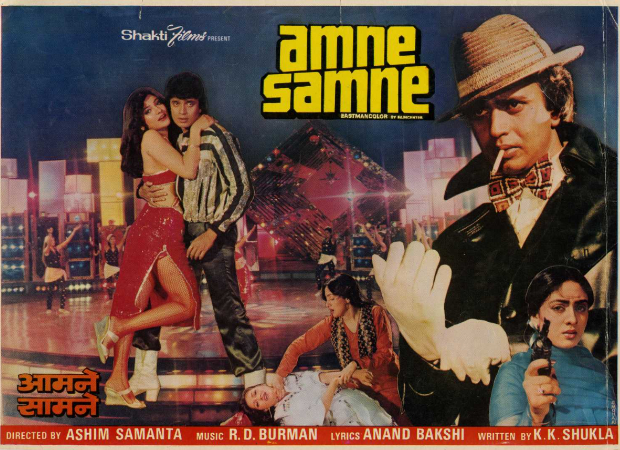
When I was making my first film, Amne Samne (1982), I wanted to shoot in a ship. I went to the office of Shipping Corporation of India Ltd; I sent my card to its Managing Director and asked for a meeting and permission. He called me immediately and told me, ‘Your father was my school teacher in Dapoli. I have the highest regards for him as he was the most wonderful school teacher. He taught us for just 1 ½ years but it made men out of all of us’! Incidentally, both my dad and the students were aged 21 at that time (laughs).
When my Dad passed away, a gentleman called me on my mobile. I wonder where he got my number from. He paid his respects and spoke highly of my father. He also said that my father was his teacher in Dapoli. Can you imagine that after so many decades, I came across two people from Dapoli who talked so lovingly about Dad?
It's common to see so many films being re-released during a milestone occasion. Would you like to re-release Shakti Samanta’s films on his 100th anniversary?
If old films are shown free of charge, then people come in hordes. However, if they have to pay for it, then there’s no audience in the cinema. I checked the past records and realized that it’s not really worth it. We experimented with the re-release of Aradhana (1969). Hardly 10-15 people were there for each show. This is when I decided that it doesn’t make sense.
Moreover, our films are usually aired on satellite channels. They are also available on YouTube. On both mediums, the prints are fantastic. I restored every film of ours 10-15 years ago. I personally checked the quality of each and every film before putting it out.”
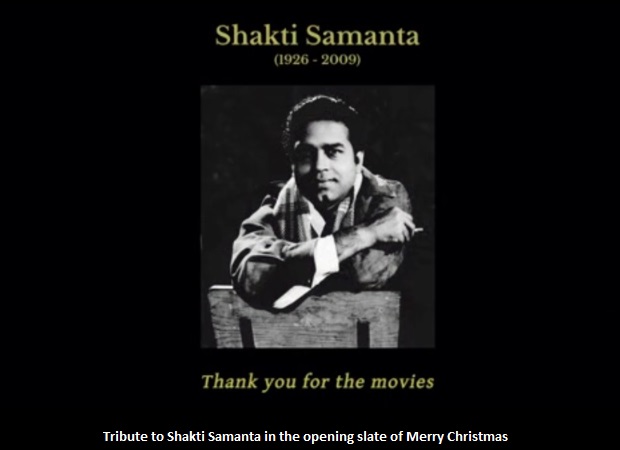
It was a pleasant surprise to see your father being thanked by Sriram Raghavan in Merry Christmas (2024)…
(Smiles) He is a very big fan of my father. I didn’t know that. He wanted to give his regards to Dad. He asked for some pictures of him and I very gladly asked him to use them (smiles).
You have made films and TV shows in the past. Though your hands are full, do you plan to make any film in the near future?
I have made 10 films and directed 350 episodes for different channels. But in the last 10-12 years, I haven’t done that. Now the budgets are also too huge. Even a television serial will cost you Rs. 4-5 crores. Approaching channels and asking them for funds can be a tedious process. Also, both my kids are in Los Angeles, USA and are happily settled. Moreover, I am over-busy with dubbing work.
BOLLYWOOD NEWS - LIVE UPDATES
Catch us for latest Bollywood News, New Bollywood Movies update, Box office collection, New Movies Release , Bollywood News Hindi, Entertainment News, Bollywood Live News Today & Upcoming Movies 2026 and stay updated with latest hindi movies only on Bollywood Hungama.