

Ratings
User ratings
Rating analysis
- Excellent85.7%
- Very Good0.0%
- Good0.0%
- Average0.0%
- Poor14.3%
Critics Review
Reviews

openup
Aashiqui 2 Review

fahad_nadeem
Aashiqui 2 Review

jewesh
Aashiqui 2 Review

khubaib_s
Aashiqui 2 Review

samson_dsouza
Aashiqui 2 Review

deep_bisai
Aashiqui 2 Review

tashfia_pasha
Aashiqui 2 Review

Bollywood Hungama
Music: Jeet Gannguli, Mithoon & Ankit Tiwari Lyrics: Irshad Kamil, Sanjay Masoomm, Sandeep Nath &…
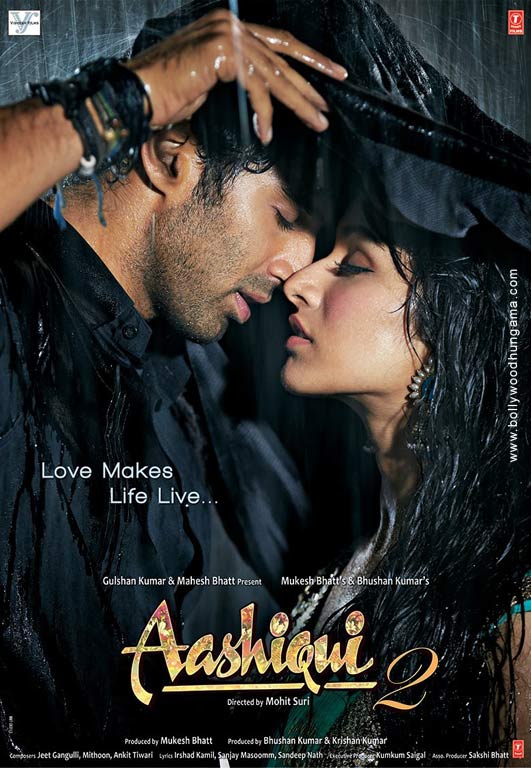
<b>Music: Jeet Gannguli, Mithoon & Ankit Tiwari</b><BR> <b>Lyrics: Irshad Kamil, Sanjay Masoomm, Sandeep Nath & Mithoon</b><BR> <b>Label: T-Series</b><BR><BR> <B>EXPECTATIONS</B><BR><BR> This is the sequel-in-spirit to probably modern Hindi cinema's only film that ran mainly because of its music score - the 1990 <i>Aashiqui</i>. This career-defining film was the breakthrough for composers Nadeem-Shravan, singer Kumar Sanu and lyricist Sameer, who wrote nine of the 11 songs. It was T-Series' biggest soundtrack ever.<BR><BR> This time, we have top lyricist Irshad Kamil writing most of the songs. But the film is a major breakthrough for singer Arijit Singh and composer Jeet Gannguli, who was earlier Pritam's partner as Jeet-Pritam and then became a top name in Bengali cinema. The soundtrack has 10 songs and once again promises to change trends in music with its desi touch to the lyrics and the music. <BR><BR> Expectations here were sky-high but the score has more than met up with them! <BR><BR> <B>MUSIC </B><BR><BR> Here is a score where all components - lyrics, compositions, vocals and arrangements - synergize to such a potent extent that four times ten equals fifty! As always in any iconic score, most of us subconsciously react <i>primarily</i> to the words, however excellent the music and singing are, and that is as true of <i>Aashiqui 2</i> as well. <BR><BR> Sample Mithoon's heartfelt sentiments in his own lyrics and composition '<i><b>Tum Hi Ho</b></i>' and we know that the direct words hit a socko punch on our emotional solar plexus in the most positive sense. <BR><BR> The composition is simple, the riffs haunting, beginning with the piano piece, and Arijit sounds very Mithoon-like. This one's a winner from the first prelude to the last note, and its endemic popularity proves it - here is one the biggest songs of the year - and may there be many after this!! <BR><BR> A word about Arijit right away - here is a singer with a rich texture and depth in his voice. He should sing smoothly, not with the heavy breaths in between. The duet version of the same song, '<i><b>Meri Aashiqui</b></i>' has Arijit with Palak Muchhal (whose voice sounds amazingly like the heroine's in the film) and is laidback, in which Arijit comes in with what sounds like a heavy-duty contrast to the fragile symphony created by the female singer. Mithoon continues his haunting interludes and this time Irshad Kamil comes in to write refined verse. <BR><BR> Arijit's second duet with Palak Muchhal, '<i><b>Chahun Main Ya Na</b></i>', sees him start with an appealing crooning tenor, and maintaining this same texture would have helped the popular song even more. The use of the flute to speak the language of lingering love and complement the singers truly lifts this track to a different level along with Palak's supple - and as can be clearly made out - highly-trained artistry. <BR><BR> The Jeet Gannguli composition's nuances have to be heard rather than described and they lift this song above the ordinary, like the tiny inflections in syllables and words and the fine-tuned <i>murkiyaan</i> (modulations). <BR><BR> This old-world melody, devoid of fancy beats, goes straight to the heart with its retro mix of percussion, strings and a very placid piano. The candid verse hits the right emotional frequency. <BR><BR> Jeet's best work, perhaps, is '<i><b>Hum Mar Jayenge</b></i>' (Tulsi Kumar-Arijit), also the finest song from Kamil in years and lyrically the trump card of the score. If GenX has identified in a huge way to the sentiments in it, it proves that perhaps idealistic and selfless love exists even in this era! The elevating <i>mukhda</i> talks about finding happiness in sharing the beloved's sorrows. <BR><BR> And like any true-blue legendary lyricist, Kamil ups the narrative graph as he moves through the <i>antaras</i>. The high professional goals set by Irshad and Jeet continue with '<i><b>Piya Aaye Na</b></i>', in which singer KK separates the men from the boys with his effortless enunciation of extreme emotion - betrayal. The morose tenor of the prelude music and Tulsi's husky vocals add to the sense of deep longing that the words, music and vocals create. <BR><BR> Arijit has two more solos. The high-pitched '<i><b>Aasaan Nahin Yahaan</b></i>' with its soft-rock feel makes it a candidate for any dark soundtrack but for the subject-specific lyrics that bring this melody back on the brand's track. Exquisite guitar-play anoints '<i><b>Milne Hai Mujhse Aayi</b></i>', which is a saga of self-introspection. The guitars move to heavy rock-like cadences and the cynical words perfectly sum up this litany of angst. <BR><BR> Sanjay Masoomm's '<i><b>Bhula Dena Mujhe</b></i>' sung soulfully by Mustafa Zahid, could well be a part of any '80s or '90s film with a different orchestral setup and vocals. This ominous lament has been given a trendy treatment that approaches hard rock. More than the treatment, however, it is the simple base melody that connects. <BR><BR> We finally come to the most haunting song on the soundtrack - that too in two versions - '<i><b>Sun Rahaa Hai Na Tu</b></i>', in its rock avatar by lyricist-composer-singer Ankit Tiwari and in a more Indian version as sung by Shreya Ghoshal. The male version is obviously filmed during a rock performance and uses apt orchestration, with Ankit letting himself go just as if he was on stage himself. <BR><BR> However, despite the greater mass appeal of this song, it is Shreya who comes up trumps with her more Indian version, where we even have brief <i>aalaaps</i>. The flute, the <i>santoor</i> and even the <i>ghatam</i> pervade the lovely number while keeping the rhythm intact. And Sandeep Nath's lines are truly ingenious! <BR><BR> <B>OVERALL </B><BR><BR> This is a score that has triumphed across barriers and made the film too work big-time at the box-office. Circa 2013, music is also more about downloads of songs as well as RBT (Ring-Back Tones) and <i>Aashiqui 2</i> is topping that side too with a pan-India sweep. Youthful yet soulful, this score proves that the Indian youth will always be moved by emotions and lilt. Even more important, only a song a listener can hum or sing along can be truly and enduringly big - and <i>Aashiqui 2</i> proves that. <BR><BR> <B>OUR PICK(S)</B><BR><BR> <i>Tum Hi Ho, Sunn Rahaa Hai Na Tu, Chahun Main Ya Naa, Hum Mar Jaayenge, Milne Hai Mujhse Aayi, Bhula Dena</i>
Read more Less